
 Canada
 USA
USA Japan
Japan

How to Preserve and Frame a Signed Football Jersey

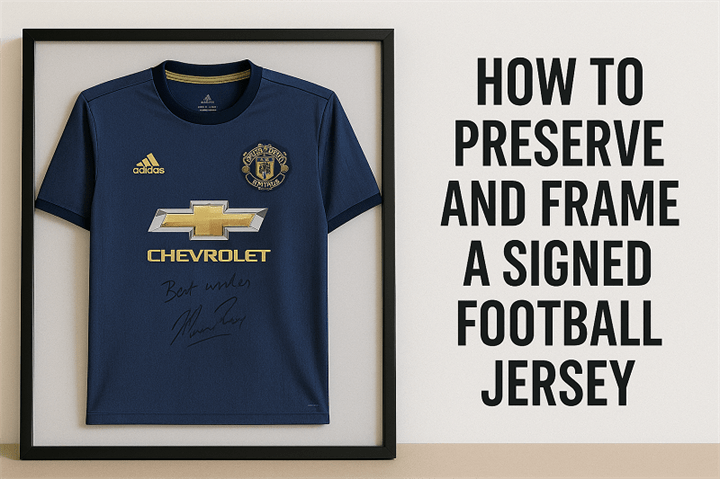
Use a shadow box with UV-protective acrylic or museum glass, an acid-free backing, and reversible stitching through seams (no glue or tape). Keep fabric off the glazing with spacers, add a dust seal, and hang away from heat, moisture, and direct sun.
What You’ll Need
-
Shadow box or deep frame (internal depth 2–3 in / 5–7.5 cm or more)
-
UV-protective acrylic (lightweight, shatter-safe) or museum glass (anti-reflective)
-
Acid-free, lignin-free backing board (mount board or foam board)
-
Archival sewing kit: polyester or cotton thread, fine needles, thimble
-
Acid-free tissue paper for shaping the jersey
-
Frame spacers or a built-in float to keep fabric off the glazing
-
Soft brush, lint-free cloth, clean nitrile gloves
-
Dust cover paper, framer’s tape for the frame (not on the jersey), D-rings + wall anchors
-
Optional: silica gel packets (to buffer humidity), nameplate, photo windows
Step 1: Choose the Right Frame & Glazing
-
Shadow box depth: A deeper frame prevents crushing crests, badges, or signatures.
-
Glazing:
-
UV acrylic blocks fading, is safer and lighter for large frames.
-
Museum glass is crystal-clear and low-glare but heavier.
-
-
Spacers: Ensure there’s at least a few millimetres of air gap so the signature and prints never touch the glazing.
Step 2: Prepare the Jersey (Preservation First)
-
Do not wash a signed jersey; moisture can feather inks.
-
Handle with clean gloves.
-
If wrinkled, lightly steam from the inside through tissue paper, keeping steam away from the autograph. Avoid irons on printed areas.
-
Add acid-free tissue inside the body and sleeves to give gentle shape and prevent sagging.
Step 3: Plan the Layout
-
Decide on arms out, folded sleeves, or V-fold to show name/number and signature.
-
Lightly mark your centres on the backing board; keep margins even (top ≈ bottom, left ≈ right).
Step 4: Archival, Reversible Mounting (No Glue)
-
Never use hot glue, spray adhesive, double-sided tape, or ordinary pins—these stain, fail, or leave holes.
-
Use minimal stitching through seams and inconspicuous areas (inside shoulders, collar seam, underarm seam). Take tiny tacking stitches that can be removed later.
-
Support heavier crests by discreet stitches around their edges (through backing cloth, not the crest itself).
-
Where needed, add a hidden fabric sling (a strip of neutral fabric behind the shoulders) to carry weight without pulling on the jersey.
Step 5: Assemble the Frame
-
Clean the glazing with a microfibre cloth; avoid harsh cleaners.
-
Place the spacer/float, then the mounted jersey on acid-free backing.
-
Fit the frame, ensuring the jersey does not touch the glazing.
-
Add silica gel (optional) in a small pouch in the frame cavity.
-
Seal the back with dust cover paper to keep out insects and dust.
-
Install D-rings and hang with appropriate wall anchors.
Step 6: Placement & Environment
-
Hang out of direct sunlight and away from radiators, fireplaces, or damp walls.
-
Ideal conditions: 18–21°C (65–70°F), 45–55% relative humidity.
-
For very valuable autographs, rotate displays (e.g., 6 months on wall, 6 months in storage) to reduce total light exposure.
Extra Preservation Tips
-
Keep any certificate of authenticity (COA) in an archival sleeve on the frame back (not touching the jersey).
-
Use anti-static acrylic if static is an issue with delicate fibres.
-
If you add photos or a nameplate, mount them on separate windows so they don’t press on the fabric.
Common Mistakes to Avoid
-
Taping or gluing the jersey to the board
-
Letting fabric touch the glass/acrylic
-
Using non-UV glazing in bright rooms
-
Ironing over prints or the autograph
-
Hanging in direct sun, high heat, or high humidity
-
Using cardboard/backing that is not acid-free
FAQ
Glass or acrylic—which is better for a jersey frame?
Acrylic is lighter and safer for large frames and offers excellent UV protection; museum glass provides top clarity and low glare. Either works if it’s UV-filtering and the jersey doesn’t touch it.
Can I use pins or double-sided tape?
No. Pins leave holes; tapes and glues yellow, fail, and can bleed into fabric. Use reversible stitching through seams instead.
How do I keep the autograph from fading?
Use UV-protective glazing, avoid direct sunlight, maintain stable temperature/humidity, and keep the fabric off the glazing to prevent transfer or sticking.