
 Canada
 USA
USA Japan
Japan

Remove Grass, Mud & Sweat Stains from Soccer (Football) Jerseys

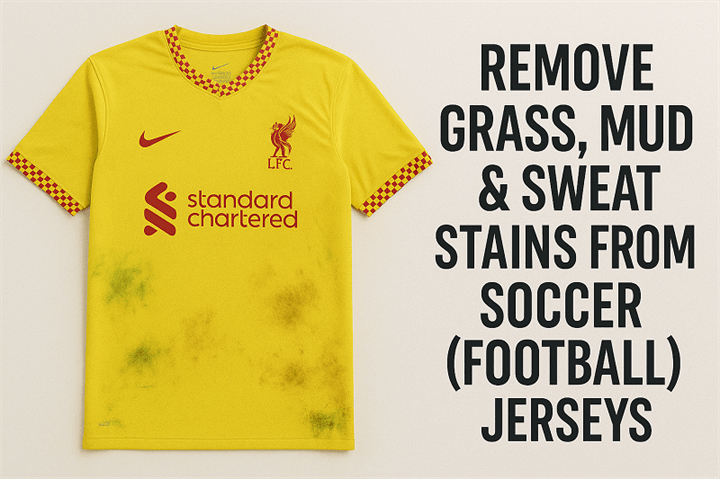
Turn the jersey inside out. Treat grass with rubbing alcohol or an enzyme detergent, mud by letting it dry then brushing and pre-treating, and sweat/odour with a baking-soda or oxygen-bleach (colour-safe) soak. Wash cold on gentle, no fabric softener or chlorine bleach, and air-dry only.
Before You Start (Protect the Jersey)
-
Check the care label and spot-test any solution on an inconspicuous area.
-
Turn inside out to protect names, numbers, and crests.
-
Avoid heat (hot water, dryers, hot irons). Heat can set stains and warp prints.
-
Never mix chemicals (e.g., hydrogen peroxide with vinegar or chlorine bleach).
Materials Checklist (pick what you need)
-
Liquid laundry detergent (enzyme or sports detergent)
-
Isopropyl rubbing alcohol (70%)
-
Oxygen bleach (colour-safe; e.g., sodium percarbonate)
-
Baking soda (bicarbonate of soda)
-
White vinegar (for odour only; do not mix with peroxide)
-
Soft brush or old soft toothbrush
-
Clean white cloths or paper towels
-
Mesh laundry bag (optional for machine wash)
1) Grass Stains (chlorophyll/dye stains)
Best for: green marks from tackles, slides, or training.
Method A — Rubbing Alcohol Pre-Treatment (fast & effective)
-
Blot the stain with a dry cloth to remove surface moisture.
-
Place a clean cloth under the stained area.
-
Dab the stain with 70% isopropyl alcohol (you can dilute 1:1 with water for sensitive colours). Do not flood prints.
-
Blot—don’t rub—until green transfers to the cloth.
-
Rinse with cold water.
-
Work a little liquid detergent into the spot for 5 minutes.
-
Rinse, then launder cold, gentle cycle. Air-dry and re-check. Repeat if needed.
Method B — Enzyme Detergent or Oxygen-Bleach Soak (gentle for larger areas)
-
Mix a basin of cold to lukewarm water (20–30°C / 68–86°F) with enzyme detergent (per label).
-
Soak inside-out for 30 minutes.
-
Gently brush from the back of the fabric to lift the stain outwards.
-
Rinse cold, then wash cold, gentle. Air-dry.
Tip: If a shadow remains, repeat the pre-treat rather than moving to high heat or harsh chemicals.
2) Mud Stains (soil/particulate)
Key rule: Let mud dry completely first—wet mud smears deeper into polyester.
-
When dry, shake and brush off as much dirt as possible (outside).
-
Turn inside out; apply liquid detergent directly and let sit 10–15 minutes.
-
For stubborn soil, soak in cold water with a bit of detergent for 30 minutes.
-
Gently brush from the back; rinse thoroughly.
-
Wash cold, gentle. Air-dry.
-
Still visible? Try a short oxygen-bleach soak (follow label), then rewash cold.
3) Sweat & Odour (and light yellowing on whites)
For odour build-up
-
Make a baking-soda soak: 4 cups (1 litre) cold water + 1 tbsp baking soda. Scale up as needed.
-
Soak 30–60 minutes.
-
Rinse, then wash cold, gentle. Air-dry.
For white jerseys with mild yellowing
-
Soak in colour-safe oxygen bleach (per product directions) with cold to lukewarm water for 1–2 hours.
-
Rinse well, wash cold, and air-dry.
Avoid chlorine bleach—it can damage polyester fibres and weaken adhesives on names/numbers.
Drying & Aftercare
-
Air-dry only. Hang on a wide hanger or lay flat, away from direct sunlight.
-
Check before drying. Heat sets stains—if any mark remains, repeat treatment.
-
Do not iron prints. If you must iron the fabric, use a cool iron on the reverse with a pressing cloth, avoiding crests and numbers.
Quick Troubleshooting
-
Old, set-in grass stain: Alternate alcohol dabbing and enzyme soak; be patient with multiple short rounds.
-
Mud “ghost” outline after washing: Do a brief oxygen-bleach soak, then a cold rewash.
-
Persistent locker-room smell: Add baking soda to the wash and skip softener. Softener can trap odours in polyester.
Common Mistakes to Avoid
-
Hot water, tumble dryers, or high-heat irons
-
Chlorine bleach or harsh stain sticks on printed areas
-
Scrubbing directly on names/numbers/crests
-
Mixing chemicals (e.g., vinegar with peroxide; any bleach with ammonia)
-
Washing with zips or rough items that can snag mesh
FAQ
Will rubbing alcohol damage a jersey?
70% isopropyl is generally safe for polyester when dabbed and followed by a cold rinse. Always spot-test first and keep it away from printed graphics.
Can I use hydrogen peroxide on grass stains?
For white jerseys only and 3% solution—spot-test first. Never mix with vinegar or chlorine bleach. For coloured kits, prefer alcohol/enzyme methods.
What temperature is best to wash?
Cold is safest (gentle cycle). Lukewarm is acceptable for soaking grass stains, but avoid hot water.
Do I need a mesh laundry bag?
It’s optional, but it helps protect crests and numbers during a gentle machine wash.